
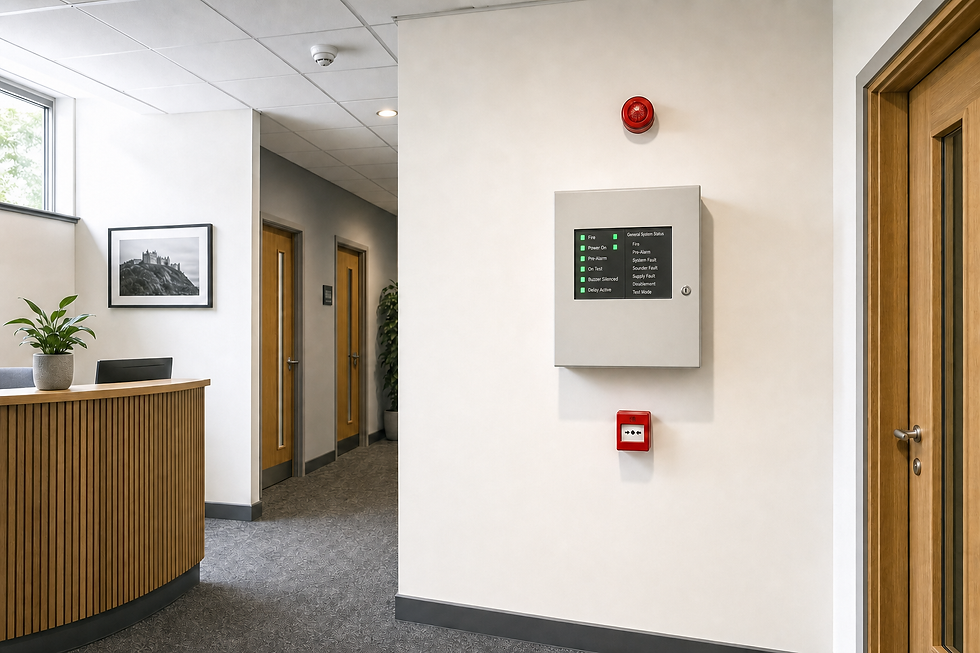
What commercial alarm testing should give you
Testing with site coordination
We organise access, notice and occupant awareness before sounders and devices are tested.
Clear defect records
Immediate faults and recommended remedial work are separated so the next step is clear.

Testing that tells you the system will respond
A fire alarm system only earns its keep when it responds as it should. Periodic testing checks that the control panel, manual call points, detectors, sounders and associated supplies are operating correctly, so faults do not stay hidden until the worst moment. We carry out commercial fire alarm testing for occupied premises where the work needs planning, notice and a sensible approach. For sites in Stirling, that means testing that respects daily operations while still giving the responsible person a clear picture of system condition.
Organised with the site and the records in mind
Before alarms are activated, we coordinate access and warning arrangements with the responsible person so occupants are not taken by surprise. During testing, we record results, identify device or circuit defects and separate immediate faults from recommended remedial work. That way, you are not left with a vague note that something failed somewhere. You get a usable record, clear defect identification and the option to plan follow-on electrical work around site safety procedures and normal building use.
Frequently asked questions
Do the alarms need to sound during testing?
Some parts of the system do need to be activated during testing, which is why coordination and advance notice matter. We work with the responsible person so occupants know what is happening and site procedures are followed.
Who should be available when testing is done?
The responsible person or an authorised site contact is helpful for access, system coordination and occupant notice. That keeps the visit organised and means any faults or follow-on questions can be discussed straight away.
What happens if a detector or circuit fails?
We record the defect clearly and explain whether it is an immediate issue or a recommended remedial item. That gives you a proper basis for repair planning rather than a vague message that the system needs attention somewhere.