
What a proper board upgrade should solve
Protection brought up to date
Modern devices can improve how faults are detected and how circuits are protected.
Hidden faults checked first
We inspect and test before replacement so existing issues are not carried straight over.

When the board needs more than another chance
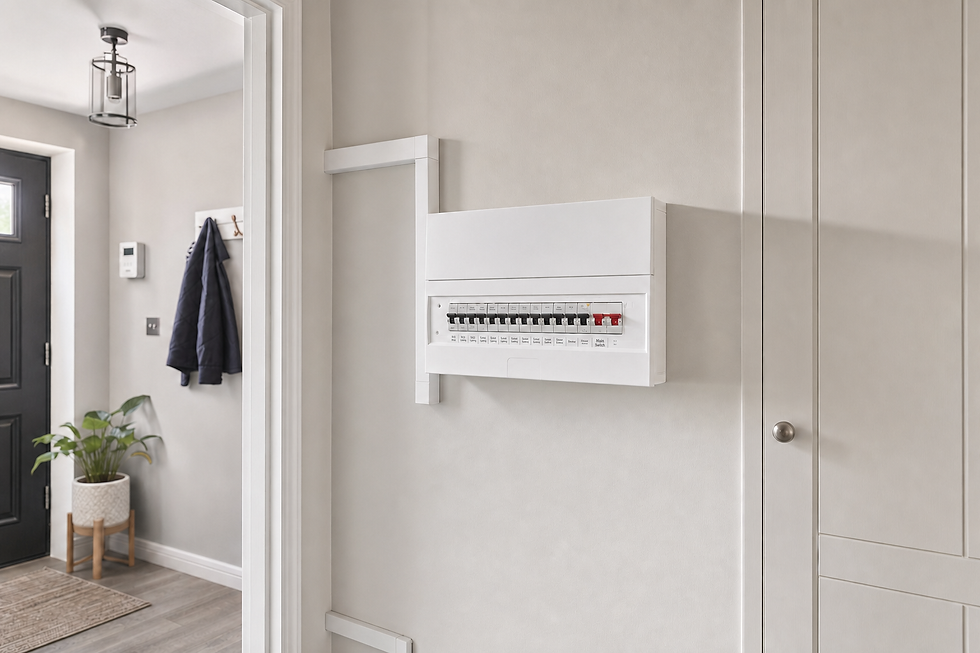
The board at the heart of the installation has a bigger job than most people notice until something starts tripping or a new addition needs more capacity. We assess older consumer units and distribution boards where protection is limited, the enclosure is damaged, heat has taken its toll or the installation has outgrown what is there. In Stirling, a board upgrade is often the point where an ageing system starts behaving like it belongs in this century rather than arguing with every added circuit.
Preparation, protection and final testing
Preparation matters because a board should not be changed blind. We identify circuits, inspect the installation and test for existing faults before replacement begins. We can then explain the role of modern protection such as RCDs, RCBOs and surge protection in plain English. On the day, there will usually be temporary isolation while the old board is removed, the new one is fitted and labelled, and the final testing is completed. You finish with clearer protection, clearer circuit identification and the right electrical documentation.
Frequently asked questions
When should a consumer unit be replaced?
Replacement is worth assessing where protection is limited, the board is damaged, signs of heat are present or there is not enough capacity for planned additions. Testing helps show whether replacement is the sensible next step.
Will the power be off during the upgrade?
Usually, yes. Temporary isolation is part of replacing the board safely. We explain that beforehand so you know what to expect and can plan around the period when the installation will be without power.
Do you upgrade commercial distribution boards too?
Yes. We work on domestic, commercial and industrial projects, and the same careful approach applies. Circuits need identifying, the installation needs assessing and testing needs completing properly before a new board is put into service.